
Nephrotoxic Spectrum and Temporal Trends of Cisplatin: A Real-World Pharmacovigilance Study Based on FAERS and EudraVigilance Databases (2004–2025)
##plugins.themes.bootstrap3.article.sidebar##
##plugins.themes.bootstrap3.article.main##
Abstract
Background: Cisplatin-induced nephrotoxicity remains a critical dose-limiting adverse event (AE). This study aimed to comprehensively evaluate the real-world nephrotoxic landscape and temporal trends of cisplatin using large-scale pharmacovigilance databases.
Methods: Adverse event reports were retrieved from the FDA Adverse Event Reporting System (FAERS) and EudraVigilance (EV) databases (2004–2025). Disproportionality analyses were performed using four algorithms: ROR, PRR, IC, and EBGM. Time-to-onset (TTO) and demographic-stratified analyses were conducted to characterize clinical profiles.
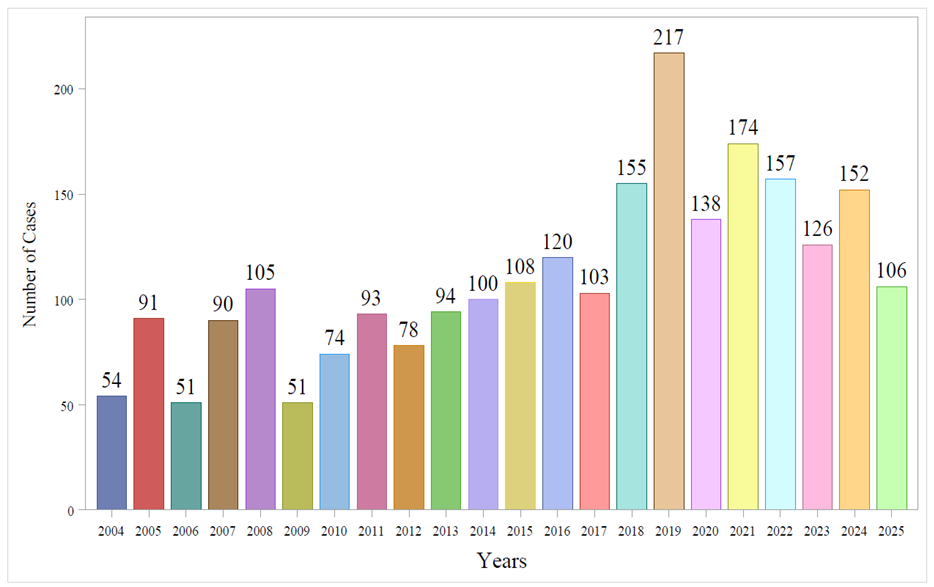
Results: A total of 2,437 reports from FAERS and 3,561 from EV were identified. In FAERS, cisplatin-associated nephrotoxicity peaked in 2019, with a male predominance (56.79%) and high clinical severity (98.24% serious cases). The median TTO was 10.00 days (IQR: 5.00–29.00), with females exhibiting a significantly shorter latency period than males (9.5 vs. 11.0 days, P = 0.0289). Disproportionality analysis revealed robust signals for Acute Kidney Injury (AKI, ROR=5.05) and exceptionally high signal intensities for Renal Salt-Wasting Syndrome (RSWS, ROR=481.57) and urinary tract structural damage (e.g., bladder necrosis). Subgroup analysis identified age-specific vulnerabilities: the geriatric cohort showed a markedly elevated risk of RSWS (ROR = 737.90) and obstructive complications, such as hydronephrosis. These findings were consistently validated in the EV database, where the RSWS signal remained robust (ROR = 208.08) even after the sensitivity analysis excluding concomitant medications.
Conclusions: This study provides multi-database evidence of the multifaceted nephrotoxic footprint of cisplatin. Beyond classic AKI, clinicians should prioritize monitoring for rapid-onset electrolyte disturbances (RSWS) and obstructive uropathy in elderly populations.