
Transarterial Chemoembolization (TACE) Combined with Quadruple Therapy (XELOX Regimen + Tislelizumab + Surufatinib) for the Treatment of Advanced Primary Hepatic Neuroendocrine Carcinoma: A Case Report
##plugins.themes.bootstrap3.article.sidebar##
##plugins.themes.bootstrap3.article.main##
Abstract
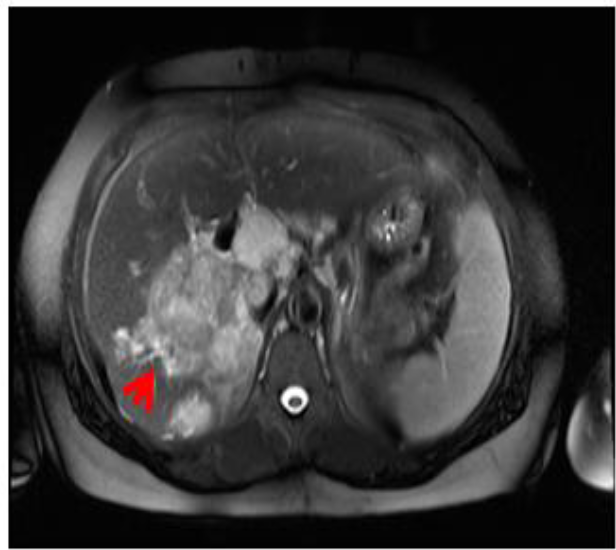
Objective: To explore the efficacy and safety of quadruple therapy combining immunotherapy and targeted therapy in the treatment of advanced primary hepatic neuroendocrine carcinoma (PHNECs).Methods: The clinical history, imaging findings, pathological immunohistochemistry, quadruple therapy involving immunotherapy and targeted therapy, as well as transcatheter arterial chemoembolization (TACE) treatment of a patient with advanced PHNECs were summarized. Relevant literature was also reviewed.Results: The patient presented with no obvious symptoms or signs. Contrast-enhanced CT revealed multiple homogeneous low-density lesions in the liver, while contrast-enhanced MRI indicated multiple intrahepatic and extrahepatic metastases. Histopathological biopsy and immunohistochemical analysis confirmed the diagnosis of hepatic small cell neuroendocrine carcinoma. Following treatment with tislelizumab, surufatinib, capecitabine, oxaliplatin, and TACE, both the primary tumor and distant metastases showed significant volume reduction.Conclusion: PHNECs are rare malignant tumors that are prone to misdiagnosis. Pathological immunohistochemistry guided by ultrasound-assisted biopsy can facilitate an accurate diagnosis. The combination of quadruple therapy with immunotherapy and targeted therapy, along with TACE, achieved favorable therapeutic outcomes in this case.