
Mechanism of Action and Potential Significance of Long Non-coding RNA-TSPAN12 in Microvascular Invasion of Hepatocellular Carcinoma
##plugins.themes.bootstrap3.article.sidebar##
##plugins.themes.bootstrap3.article.main##
Abstract
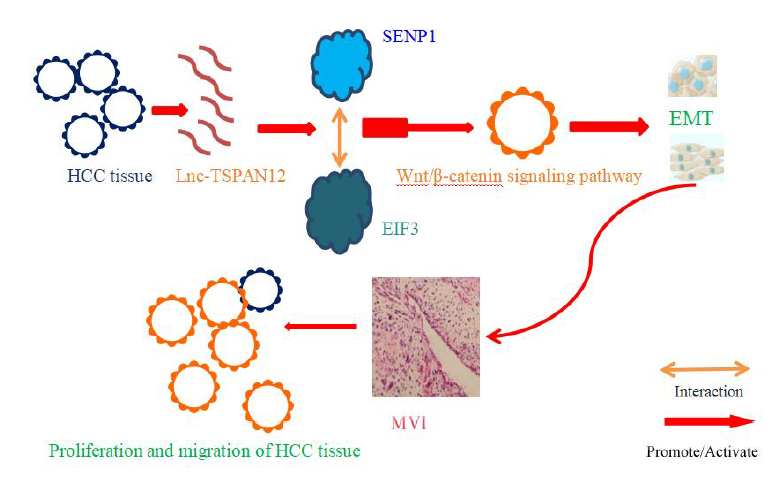
Hepatocellular carcinoma (HCC) is the most common type of primary liver cancer and has garnered significant attention due to its rapid progression and aggressive nature. The treatment of HCC primarily involves surgical resection, supplemented by various therapeutic approaches such as targeted therapy, immunotherapy, chemotherapy, and interventional therapy. However, due to its complex pathogenesis and high recurrence rate, the therapeutic effects are often suboptimal.Microvascular invasion (MVI) is one of the important indicators of HCC malignancy and prognosis, closely associated with tumor progression, metastasis, recurrence, and poor prognosis. In recent years, long non-coding RNAs (lncRNAs) have been discovered to possess diverse biological functions and have gradually become a new focus in cancer research. Among them, lnc-TSPAN12, a highly expressed lncRNA in HCC, has been confirmed to be closely related to poor patient survival rates. This article reviews the mechanism of action of lnc-TSPAN12 in HCC, particularly in the context of MVI, and explores its potential as a biomarker for diagnosing HCC with MVI. The aim is to provide new targets and ideas for the treatment of HCC patients.