
Evaluating Evaluating the Effectiveness and Skill Correlation of ESP-Based Childcare English Materials on Taiwanese Learners' Four Language Skills
##plugins.themes.bootstrap3.article.sidebar##
##plugins.themes.bootstrap3.article.main##
Abstract
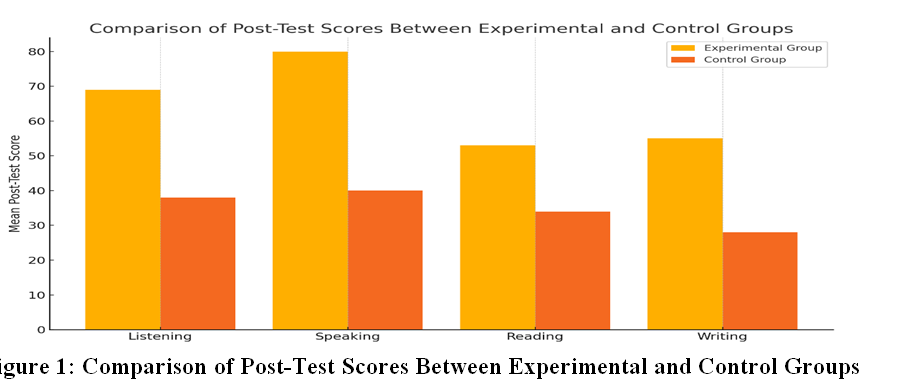
This study investigates the effectiveness of a self-developed English for Specific Purposes (ESP) textbook on improving the four core English skills—listening, speaking, reading, and writing—among Taiwanese childcare students. Excluding needs analysis, the research focused on measuring learning outcomes and analyzing skill correlations. A quasi-experimental design was implemented with 95 sophomore students divided into experimental (ESP) and control (EGP) groups. Pre- and post-tests were conducted, and independent samples t-tests and Pearson correlation analyses were applied. The results revealed that the experimental group significantly outperformed the control group in all four skills. The most notable improvements were observed in speaking and listening. Strong positive correlations were also found between listening and speaking (r = .76) and between reading and writing (r = .73), suggesting interdependence among skill sets. The discussion emphasizes the pedagogical value of integrating receptive and productive skills in ESP instruction and aligning content with vocational relevance. Implications include adopting integrated-skill course design, enhancing teacher training in ESP pedagogy, and promoting institutional support for profession-specific English education. The study concludes that ESP instruction fosters greater motivation, skill development, and job-readiness for vocational learners in childcare.