
A Needs Analysis of Childcare Learners for an ESP Curriculum: A Case Study from Taiwan
##plugins.themes.bootstrap3.article.sidebar##
##plugins.themes.bootstrap3.article.main##
Abstract
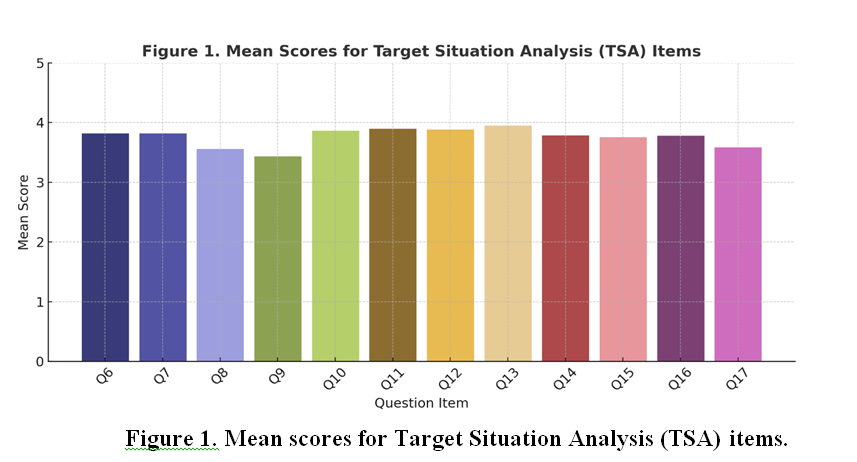
This study investigates the English learning needs of childcare students at a university in northern Taiwan to inform the design of an English for Specific Purposes (ESP) curriculum. Given the limited availability of childcare-related English materials in Taiwan, the study aims to identify learners’ Target Situation Analysis (TSA), Learning Situation Analysis (LSA), and Present Situation Analysis (PSA). A total of 204 students completed a 60-item needs analysis questionnaire, covering personal background, TSA (Q6–17), LSA (Q18–39), and PSA (Q40–60). Reliability scores were high across all categories: TSA (α = .919), LSA (α = .817), and PSA (α = .887). Descriptive statistics and thematic coding of open-ended responses were used. Participants showed strong motivation to improve their English for childcare-specific situations (e.g., Q13: M = 3.94, SD = 0.89). Students faced challenges in grammar and listening but expressed willingness to learn through multimedia and contextual guessing strategies. Speaking (M = 4.08) and reading (M = 3.81) were rated as highly important skills. Findings suggest an urgent need to tailor ESP content for childcare students, emphasizing professional vocabulary, listening, and speaking skills. Recommendations are made for textbook revisions and interactive instructional strategies.