
PGK1 Could Function as a Prognostic Marker and Correlate with Immune Infiltration in Head and Neck Squamous Cell Carcinoma
##plugins.themes.bootstrap3.article.sidebar##
##plugins.themes.bootstrap3.article.main##
Abstract
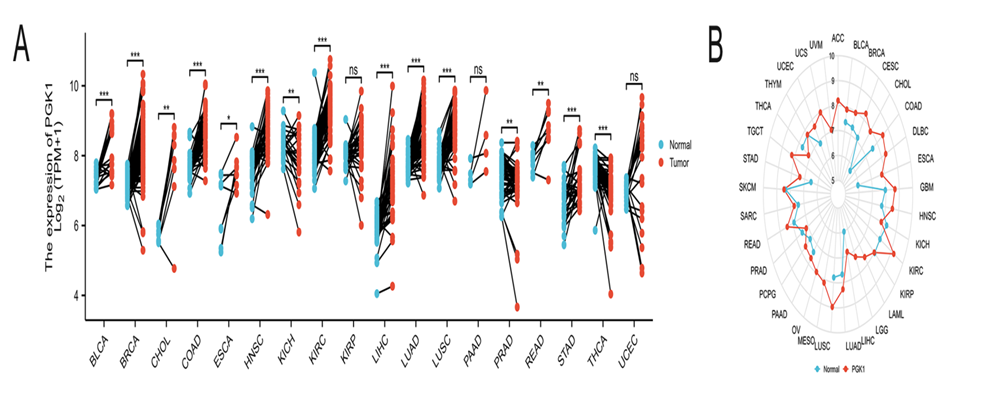
Objectives: Head and neck squamous cell carcinoma (HNSC) is one of the most prevalent cancers, therefore it is crucial to identify HNSC biomarkers. Phosphoglycerate kinase 1 (PGK1) has a role in the development and progression of certain types of cancer. The function of PGK1 in HNSC remains unknown. This is the first study on the expression of PGK1 in HNSC patients, as well as its prognostic significance, putative biological roles, and influence on the immune system.
Methods: The Cancer Genome Atlas (TCGA) data served as the foundation for gene expression and clinicopathological analysis, enrichment analyses, and immune infiltration investigations. Utilizing TIMER and ssGSEA, the immunological response to PGK1 expression in HNSC was analyzed statistically. Additionally, Gene Expression Omnibus (GEO), Kaplan-Meier (K-M) survival analysis, and Human Protein Atlas (HPA) data were utilized to confirm the results.
Results: PGK1 was an important independent prognostic factor for HNSC patients. According to GSEA, PGK1 is responsible for increasing DNA replication and inhibiting immunological activity. Co-expressed with immune-related genes and immunological checkpoints, PGK1 expression was substantially linked to B cell and dendritic cell invasion.
Conclusion: The expression of PGK1 is increased in HNSC, and the high expression of PGK1 is associated with a poor prognosis. PGK1 may affect tumor development by regulating tumor-infiltrating cells in the tumor microenvironment (TME). PGK1 may be a potential target for immunotherapy.