
Der Zusammenhang zwischen der T3394C-Punktmutation der mitochondrialen DNA und Patienten mit Typ-2-Diabetes mellitus in der Bai-Ethnie im Nordwesten von Yunnan, China
##plugins.themes.bootstrap3.article.sidebar##
##plugins.themes.bootstrap3.article.main##
Abstract
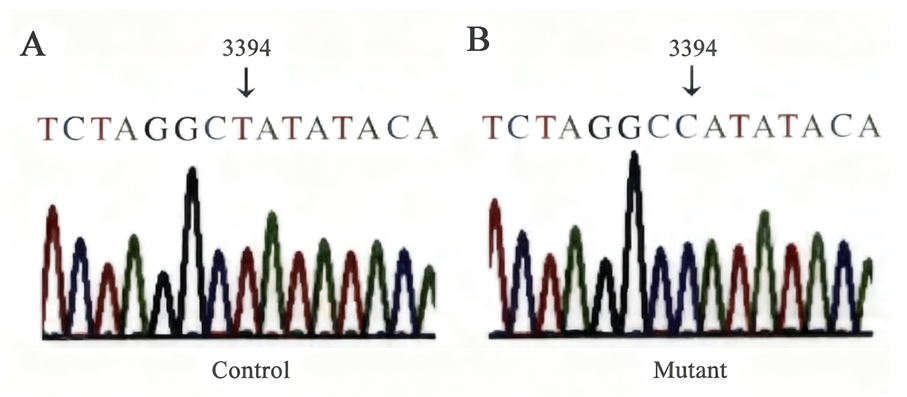
Type 2 diabetes mellitus (T2DM) is a complex metabolic disorder commonly accompanied by insulin resistance and pancreatic β-cell dysfunction, with increasing evidence implicating mitochondrial DNA (mtDNA) mutations in its pathogenesis. This study aimed to elucidate the potential association between the T3394C point mutation in the mitochondrial NADH dehydrogenase subunit 1 (ND1) gene and susceptibility to T2DM among individuals of the Bai ethnic minority. A total of 200 unrelated Bai participants diagnosed with T2DM and 216 ethnically matched controls with normal glucose tolerance and no family history of diabetes were recruited from Dali, Northwest Yunnan, China. The presence of the T3394C mutation was screened using polymerase chain reaction–restriction fragment length polymorphism (PCR-RFLP) analysis, and statistical evaluation was conducted with SPSS software (version 26.0). The T3394C mutation in the mitochondrial ND1 gene was detected in 5 individuals within the T2DM group (2.50%) and in only 1 control subject (0.46%), representing a statistically significant difference between the two groups (P<0.05). Furthermore, this mutation exhibited a clear pattern of maternal inheritance among affected individuals. These findings suggest that the T3394C point mutation in the mitochondrial ND1 gene may be implicated in the development of T2DM in elderly individuals of the Bai ethnic minority, thereby providing novel insights into the mitochondrial genetic basis of diabetes susceptibility in this population.