
Research on Slight Decarburization Grinding Hardening based on the Gas-protecting Coupling Method
##plugins.themes.bootstrap3.article.sidebar##
##plugins.themes.bootstrap3.article.main##
Abstract
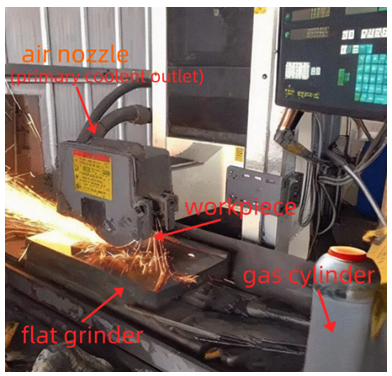
This study advances the field of abrasive machining with a novel gas-protecting coupling method designed to control decarburization during the grinding hardening process. Traditional grinding hardening, while effective for imparting surface hardness, can cause decarburization, leading to a loss of material properties such as toughness and fatigue strength. To mitigate this, a method is proposed that employs a nitrogen gas shield to protect the workpiece surface from reactive atmospheric gases. An experimental platform is developed allowing for the application of nitrogen gas during grinding. The results from 45 steel workpiece demonstrated that the gas-protected grinding hardening process preserves carbon content at the surface. Computational fluid dynamics simulations were conducted to analyze the airflow-field interaction, providing insights that led to the optimization of the gas injection strategy. Additionally, a deep neural network model was trained to predict carbon content variations, supporting the precision control of the decarburization process. Collectively, these findings offer a significant contribution towards greener and more efficient manufacturing processes for carbon steel components.