
Risk Factors for Lymph Node Metastasis in Level Iib of Papillary Thyroid Carcinoma
##plugins.themes.bootstrap3.article.sidebar##
##plugins.themes.bootstrap3.article.main##
Abstract
Objective:This study endeavors to delve into the risk factors associated with level IIb lymph node metastasis in patients with papillary thyroid carcinoma (PTC). Methods:A retrospective analysis was carried out on patients with PTC who underwent surgical treatment at our hospital between September 2019 and February 2025. Multiple factors were taken into consideration, including age, gender, thyroglobulin levels, blood glucose, blood lipid profiles, descriptions of color Doppler ultrasonography.
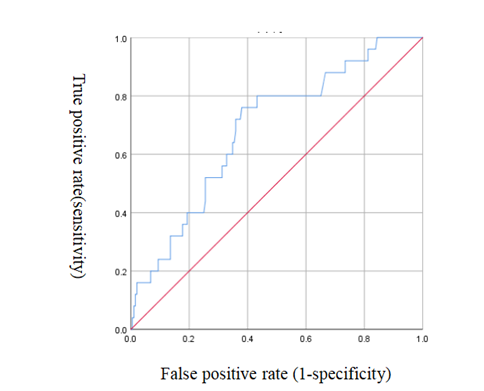
Results:A total of 217 patients with pathologically confirmed pN1b PTC were enrolled in this study. The patients were categorized into two groups according to the presence or absence of level IIb lymph node metastasis. Univariate analysis indicated that nodule location, maximum nodule diameter, capsular invasion or extrathyroidal invasion, maximum lymph node diameter, level IIa lymph node metastasis, and thyroglobulin levels were correlated with level IIb lymph node metastasis. Subsequent multivariate regression analysis further revealed that nodule location, maximum nodule diameter, and level IIa lymph node metastasis were independent risk factors for level IIb lymph node metastasis. Based on the receiver operating characteristic curve analysis, it was determined that when the maximum nodule diameter was ≥ 1.59 cm, the likelihood of level IIb lymph node metastasis was significantly higher.
Conclusion:In cases where preoperative color Doppler ultrasonography indicates that the nodule with the highest classification and largest diameter is located at the upper pole of the thyroid gland, with a diameter of ≥ 1.59 cm, or when level II lymph node metastasis is detected either preoperatively or intraoperatively, level IIb lymph node dissection is recommended.