
Relationship between Uric Acid Level and Blood Lipid in Sex Difference among Chinese Community Elderly Population
##plugins.themes.bootstrap3.article.sidebar##
##plugins.themes.bootstrap3.article.main##
Abstract
Objective: This study aimed evaluate the association between serum uric acid (SUA) levels and blood lipid among community elderly and explore the sex difference.
Methods: A cross sectional study was conducted in a representative urban area of Hangzhou in 2023. A two-stage stratified clustering sampling method was used and 1998 elderly participants were included. Overnight fasting blood samples were taken to determine serum uric acid, cholesterol, triglyceride, low density lipoprotein, high density lipoprotein, γ-glutamyl transpeptidase and other biochemical indexes. Demographic and clinical variables, including body mass index (BMI/height2), waist-to-hip ratio and blood pressure, were measured and recorded through face-to-face interviews with structured questionnaires.
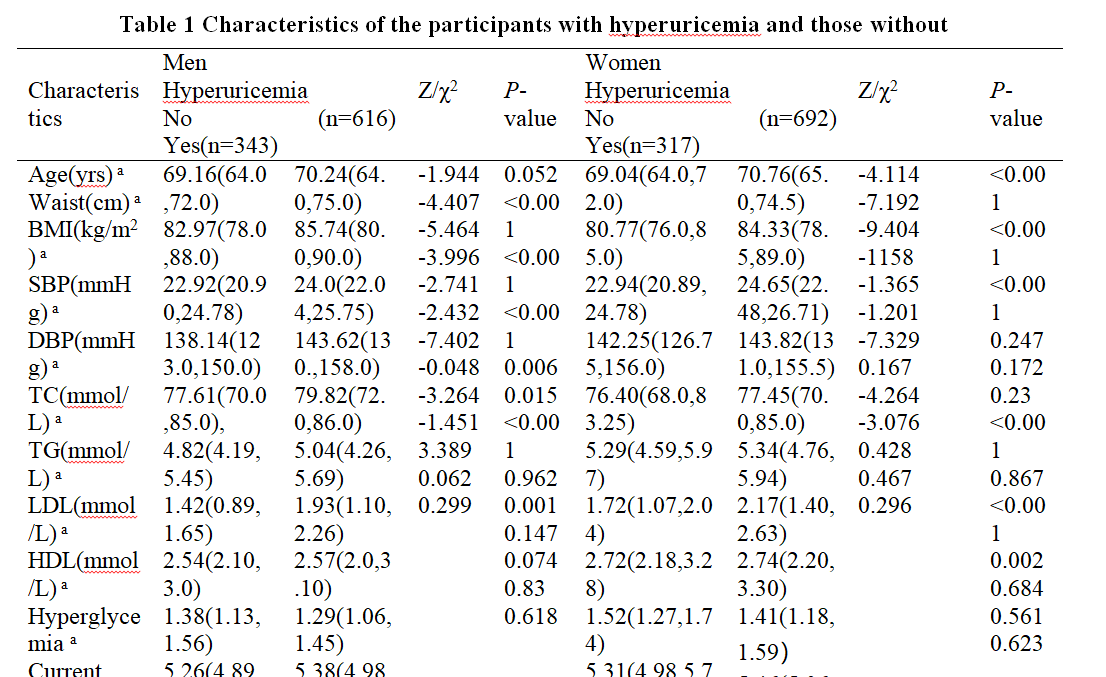
Results: The prevalence of SUA was 34.26% in men and 28.95% in women, respectively. There was a strong association between hyperuricemia and three components of blood lipid in men and two components in women. Multivariate Logistic regression analysis showed:(1) triglyceride was a risk factor for men and women. (2) Total cholesterol was statistically significant only in men, while high density lipoprotein was only a protective factor in women.
Conclusion: This study shows that there is a significant correlation between serum uric acid and blood lipids among the elderly in the community of Hangzhou. Among women, uric acid is more closely related to the risk of blood lipids than men. Doctors should recognize that hyperlipidemia is a common common disease of SUA and take measures as soon as possible to prevent follow-up chronic diseases.