
Can a Reduction in the Contribution Rate of the Basic Old-Age Insurance Scheme Extend the Coverage of the Scheme? A Study Based on a Difference-In-Differences Model Comparing Two Regions
##plugins.themes.bootstrap3.article.sidebar##
##plugins.themes.bootstrap3.article.main##
Abstract
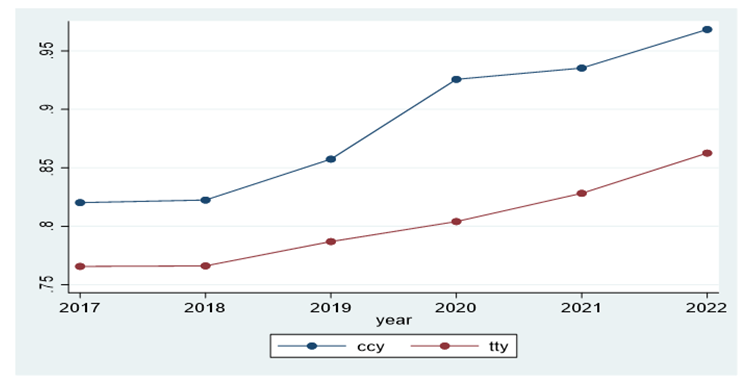
Reducing the basic old-age contribution rate has become an important measure for reducing enterprises’ burdens and maintaining system fairness. This study examines the implementation effects of the current contribution reduction policy and provides empirical evidence for formulating and adjusting subsequent support policies. In this paper, the implementation of the 2019 old-age insurance contribution rate reduction policy is treated as a quasi-natural experiment, and a difference-in-differences approach is used to examine the impact of the reduction in statutory contribution rates on coverage rates. The policy shock of reducing the old-age insurance contribution rate has a significant positive effect of approximately 6.5% on increasing the old-age insurance coverage rate in the experimental group compared with the control group, with a dynamic growth trend. Further heterogeneity analysis across provinces reveals that regions with higher pension burdens do not show a significant upward trend in coverage in the face of falling contribution rates, whereas economically underdeveloped regions show a significant downward trend in coverage. Overall, the policy of reducing old-age insurance contributions is beneficial for increasing old-age insurance coverage rates; however, significant regional disparities exist. In the future, it is necessary to develop differentiated policies tailored to various regions to ensure the fairness and sustainability of the system.