
Estrogen Induces Breast Cancer Cells Stemness by Activating PI3K/AKT/mTOR Signaling Pathway
##plugins.themes.bootstrap3.article.sidebar##
##plugins.themes.bootstrap3.article.main##
Abstract
Abstract
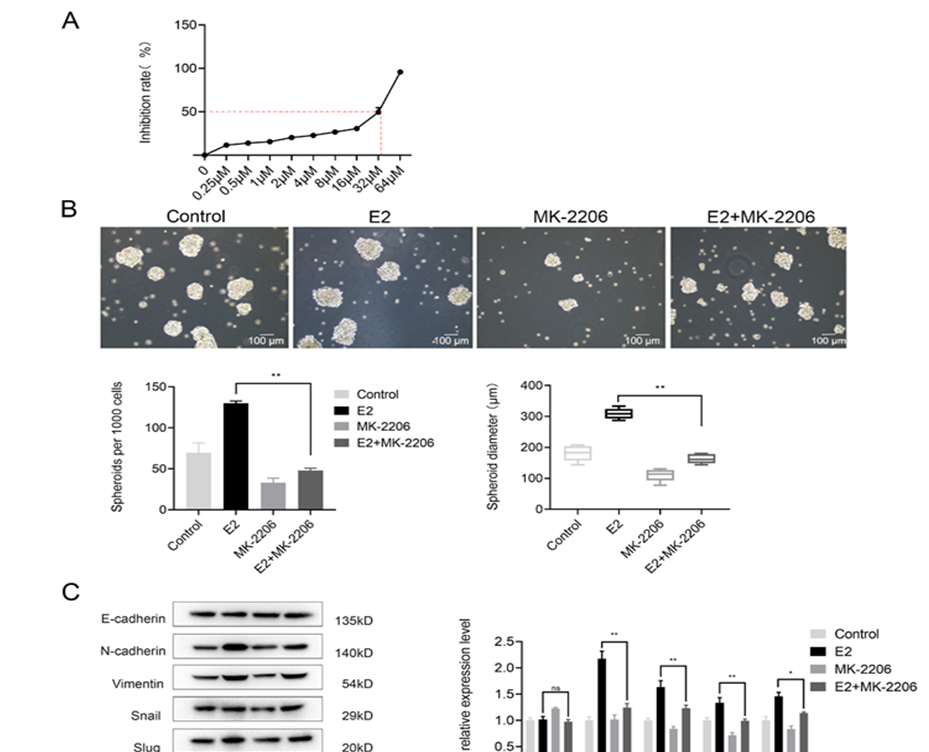
Background: Breast cancer (BC) is a malignant disease characterized by high morbidity and mortality. Estrogen plays a crucial role in the initiation and progression of BC, as well as in the development of BC stem cells (BCSCs). PI3K/AKT /mTOR Signaling Pathway holds significant importance in epithelial-mesenchymal transition and BCSCs generation. Therefore, thisthis study aims to explore the mechanisms by which estrogen influences the characteristics of BCSCs. Methods:. MCF-7 BC cells were grouped as Control, Estradiol (E2), Fulvestrant and E2+Fulvestrant used for the study. CCK8, colony formation and wound healing assay were applied to identify the proliferation and migration of MCF-7 cells. study.CCK8, The Cell Counting Kit-8 (CCK-8), colony formation assay, and wound healing assay were employed to assess the proliferation and migration of MCF-7 cells. The expression of estrogen receptor alpha(ERα), BCSCs, Epithelial Mesenchymal transition (EMT), and the mTOR signaling pathway related genes and proteins were verified with qPCR and Western blot. The characteristics of BCSCs were identified using mammosphere formation assay and flow cytometry. Results: Estrogen induced and promoted the expression of BCSCs-related genes, including ABCG2, Nanog, and Oct-4 in MCF-7 cells. Estrogen treatment also increased the proliferation, migration, and spheroid-forming ability of MCF-7 cells. Furthermore, estrogen enhanced EMT conversion via activation of the mTOR signaling pathway. Conclusion: Estrogen promotes BCSCs stemness by enhancing EMT and activating the mTOR signaling pathway.