
Sleep Structure Abnormality Associated with Cognitive Impairment in Lgi-1 Positive Autoimmune Encephalitis Patient: A Long-Term Follow-Up Case Study
##plugins.themes.bootstrap3.article.sidebar##
##plugins.themes.bootstrap3.article.main##
Abstract
We reported a long-term follow-up anti-LGi-1 positive autoimmune encephalitis (LGi-1 AE) case that presented special sleep disorder associated with cognitive impairment during exacerbating and recovery stage that was not reported previously.
Methods: A LGi-1 AE patient underwent neuropsychological and sleep assessment including polysomnography in both exacerbating and fifteen months recovery stages.
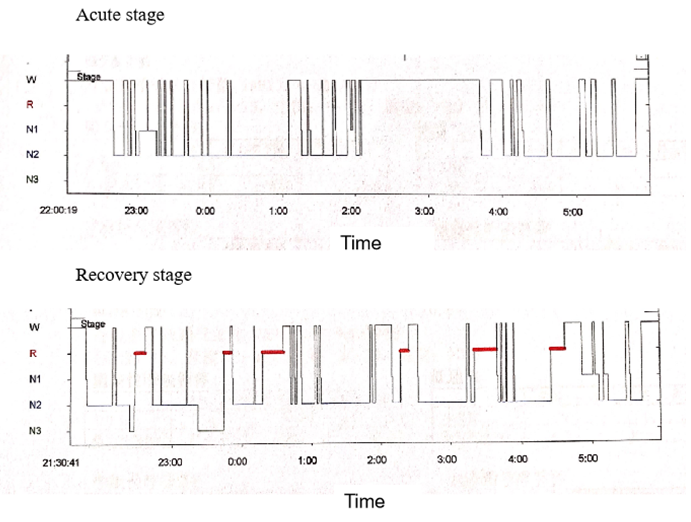
Results: At exacerbating stage, neuropsychological evaluation indicated a moderate cognitive impairment. Polysomnography results showed severe sleep fragmentation、sleep efficiency decrease, and complete loss of N3 and REM sleep. At recovery stage after fifteen months, neuropsychological evaluation revealed improved cognitive function while mild memory impairment was still observed. Polysomnography results showed improvement of sleep fragmentation, normal sleep efficiency, and normal REM sleep. N3 sleep remained shorter than that of healthy control. These results indicated that the sleep structure abnormality was synchronized with cognitive impairment. Even in recovery stage, the shortened N3 sleep was coexisted with mild memory impairment.
Conclusion: In our LGi-1 AE patient, main sleep structure abnormality included sleep fragmentation, and loss of N3 and REM sleep may leaded to cognitive impairment. Bilateral lesions at the hippocampus might lead to both the sleep structure abnormalities and the cognitive impairment in our case.