
Prognostic Significance and Diagnostic Potential of High E2F3 mRNA Expression in Bladder Urothelial Carcinoma
##plugins.themes.bootstrap3.article.sidebar##
##plugins.themes.bootstrap3.article.main##
Abstract
Background: Bladder urothelial carcinoma (BLCA) is a lethal malignancy with poor prognosis and low survival rates, and it is difficult to diagnose early. Transcription factor E2F3 plays an important role in tumor growth. This study explored the prognostic value of E2F3 in BLCA.
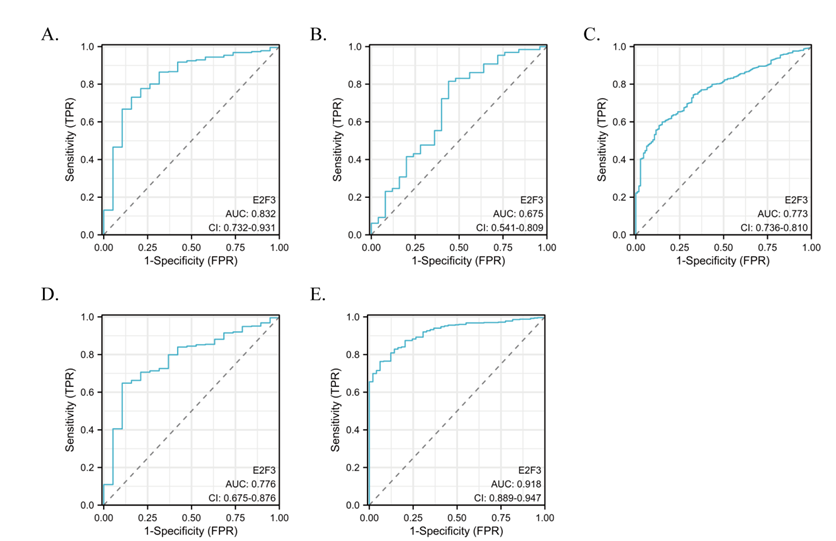
Methods: We analyzed the E2F3 mRNA expression using the data from TCGA-BLCA cohort. Areceiver operating characteristic(ROC) curve was performed to assessed the diagnostic value of E2F3 mRNA expression in BLCA. Chi-square test was used to analyzed the correlation between clinicalcharacteristics and E2F3 mRNA expression. Kaplan-Meier analysis and Cox analysis were performed to determine the prognostic value of E2F3 mRNA expression in BLCA. Gene set enrichment analysis(GSEA) was conducted using TCGA database.
Results: Our results revealed that E2F3 mRNA expression was higher in BLCA tissues than in normal tissues. E2F3 presented a moderate diagnostic value in BLCA. High E2F3 mRNA expression was correlated with T classification, Distant metastasis, Pathological grade of BLCA. High E2F3 mRNA expression was associated with poor overall survival. Furthermore, Multivariate analysis revealed that E2F3 was an independent risk factor for BLCA patients. PI3k akt pathway,Notch3 pathway, cancer pathway, β- catenin pathway, bladder cancer and β- catenin transactivating complex were differentially enriched in the phenotype that positively correlated with E2F3.
Conclusion: In conclusion, our results suggest that E2F3 was a promising diagnostic and prognostic biomarker for BLCA.