
Integration of Ecology and Culture into the Rural Leisure Tourism Industry: A Spatial Coupling Analysis of Sustainable Regional Growth Mechanisms
##plugins.themes.bootstrap3.article.sidebar##
##plugins.themes.bootstrap3.article.main##
Abstract
Due to increased global economic integration and the in-depth implementation of ecological civilization, environmental protection and sustainable development have become a global focus. The rural leisure tourism industry bridges the natural environment and human activities. It promotes the greening of the regional economy and the transformation of ecological values.
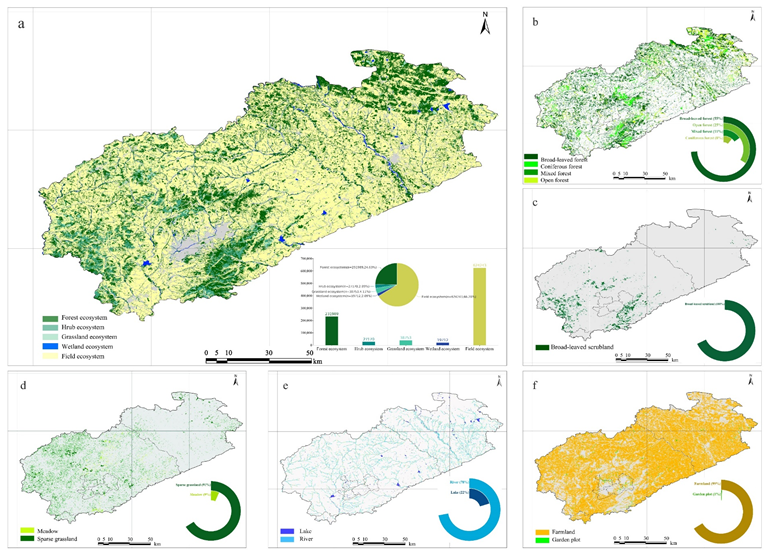
This study uses a research framework of ecology-culture-industry integration. Geographic information system (GIS) and spatial coupling analyses are conducted to analyze the integration of ecological resources, regional culture, and the rural leisure tourism industry and its effect on the industry’s sustainable development. The current conditions and the interaction between ecological resources and regional culture are systematically analyzed by conducting an empirical investigation of the agro-pastoral ecotone in northern China.
The results show that ecological resources and the material and spiritual values of regional culture improve the competitiveness of rural leisure tourism and its ability to attract visitors. Optimizing the allocation of ecological resources, considering regional cultural characteristics, and promoting industrial integration and innovation improve the competitiveness and sustainable development of the rural leisure tourism industry.