
Cross-Regulation of Hypertrophic Cardiomyopathy and Pan-Apoptosis: Focusing on the Central Role of NLRC5, DRP1 and RIPK Family
##plugins.themes.bootstrap3.article.sidebar##
asdasd
Veröffentlicht
Jul 2, 2025
##plugins.themes.bootstrap3.article.main##
Abstract
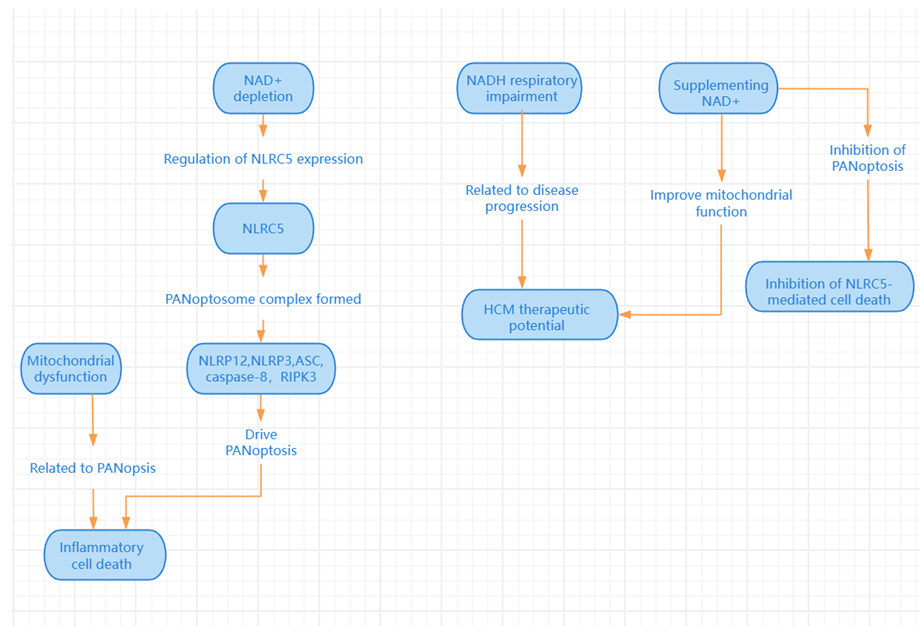
Hypertrophic cardiomyopathy (HCM) is an inherited heart disease caused directly by genetic mutations. From the molecular point of view, the pathogenesis of this disease involves a variety of pathophysiological changes, mainly including cardiac myocyte programmed death, mitochondrial dysfunction and persistent inflammatory response. Recent studies suggest that panapoptosis, a novel cell death mode, may play a key role in the development of HCM.
This article focuses on three important regulatory molecules and the potential link between hypertrophic cardiomyopathy and panapoptosis.
- NLRC5, in HCM, showed protective effects on the heart muscle, distinct from its role in promoting cell death in other inflammatory responses.
- DRP1, which may participate in the process of cardiomyocyte death and promote myocardial fibrosis through ZBP1-PANopsis signaling pathway. This finding reveals a potential link between mitochondrial dysfunction and pan-apoptosis.
- RIPK family members, including RIPK1 and RIPK3. They have dual regulatory properties: on the one hand, they can promote cardiac hypertrophy through necrotic apoptosis pathway and CaMKIIδ-mPTP mechanism; on the other hand, they can integrate multiple death signals to regulate the progress of PANopsis. (Table 1)
Downloads
Keine Nutzungsdaten vorhanden.
##plugins.themes.bootstrap3.article.details##
Rubrik
Medical Research-Current Science