
Validation of Optical Augmented Reality Display Technology in Ultrasound-Guided Paravertebral Model Puncture
##plugins.themes.bootstrap3.article.sidebar##
##plugins.themes.bootstrap3.article.main##
Abstract
Objective: Validation of the Feasibility of an Optical Augmented Reality Display System in Ultrasound-Guided Paravertebral Model Puncture
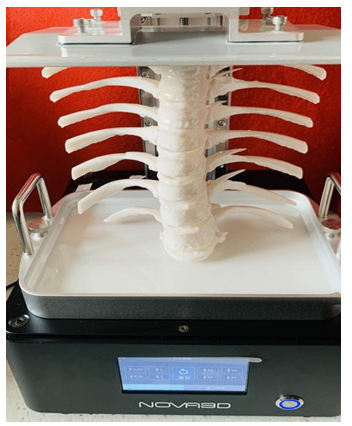
Methods: A highly realistic 3D-printed paravertebral gel model was created. Two junior anesthesiologists (beginners in ultrasound-guided puncture) and two senior anesthesiologists (with more than five years of experience in ultrasound-guided puncture) were randomly assigned using a random number table to perform paravertebral puncture under either conventional ultrasound guidance or an optical augmented reality display system. A total of 84 punctures were performed and categorized into four groups (n=21): senior augmented reality-guided puncture group (AR-S), junior augmented reality-guided puncture group (AR-B), senior conventional ultrasound-guided puncture group (C-S), and junior conventional ultrasound-guided puncture group (C-B).For each puncture, the procedure time, the number of needle adjustments, and the operator’s satisfaction score with the procedure were recorded. A single observer verified whether the needle tip reached the target location and whether the pleura or dura was punctured.
Results: Compared with the C-B group, the puncture time in the AR-B group was reduced (P < 0.05). There was no statistically significant difference in puncture time between the AR-S and C-S groups (P > 0.05).Compared with the C-B group, the number of needle adjustments in the AR-B group was lower (P < 0.05). There was no statistically significant difference in the number of needle adjustments between the AR-S and C-S groups (P > 0.05).Compared with the C-B group, the satisfaction score in the AR-B group was higher (P < 0.05). There was no statistically significant difference in satisfaction scores between the AR-S and C-S groups (P > 0.05).Compared with the C-S group, the number of head movement shifts in the C-B group was higher (P < 0.05). No head movement shifts were observed in the AR-B and AR-S groups.All needle tips successfully reached the target area, and no dural punctures occurred. In the C-B group, three cases of pleural puncture were observed, with an incidence rate of 14.3%.
Conclusion:Optical augmented reality display technology in ultrasound-guided paravertebral model puncture can eliminate the operator’s need for head movement shifts during ultrasound-guided procedures. For junior anesthesiologists, it significantly reduces puncture time, decreases the number of needle adjustments, improves operator satisfaction, and lowers the incidence of related complications. However, senior anesthesiologists do not show significant benefits in these aspects.