
Association between Cardiac Output and Anesthesia Emergence Time in Elderly Patients with Coronary Heart Disease: A Secondary Analysis Based on DRYAD Databases
##plugins.themes.bootstrap3.article.sidebar##
##plugins.themes.bootstrap3.article.main##
 https://orcid.org/0009-0005-3026-9478
Hai Lin
Liu Song
Liang Zou
Yongshan Nan
https://orcid.org/0009-0005-3026-9478
Hai Lin
Liu Song
Liang Zou
Yongshan Nan
Abstract
Abstract
Background: General anesthesia is widely regarded as a safe and effective procedure; however, in elderly patients, it is associated with an increased risk of both intraoperative and postoperative complications, as well as higher mortality rates, primarily due to age-related physiological changes. During general anesthesia for noncardiac surgery, knowledge gaps remain regarding the effect of cardiac output (CO) on patient-centered anesthesia wake. Therefore, this study aims to evaluate whether CO is associated with anesthesia emergence time among elderly patients with coronary heart disease (CHD).
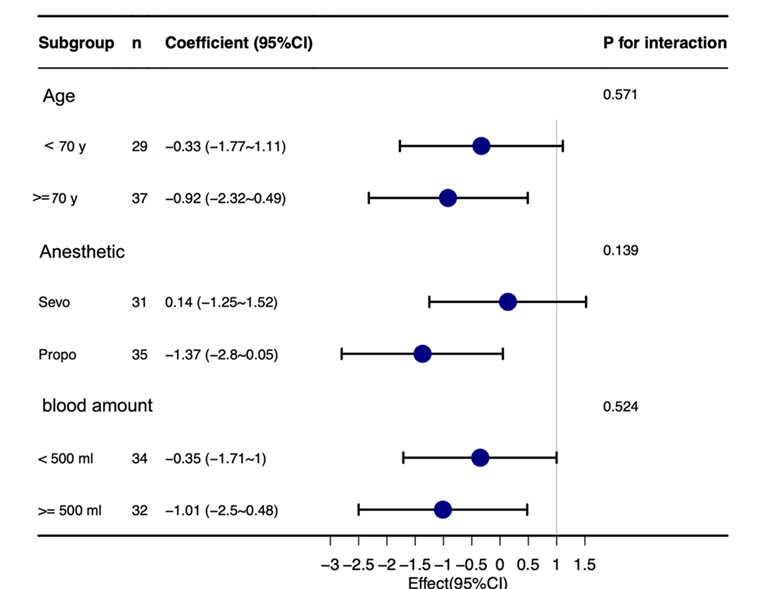
Methods: Data for this study were sourced from the Dryad Digital Repository and included 121 elderly patients aged 65 to 80 years who underwent laparoscopic surgery with an estimated surgical time of ≥4 hours. Patients were divided into two groups based on the median preoperative CO. The relationship between preoperative CO and anesthesia emergence time was analyzed using linear regression models, adjusting for various confounding factors.
Results: Univariate linear regression analysis showed a significant association between preoperative CO and anesthesia emergence time (P < 0.05). Multivariate stepwise regression analysis confirmed this association, even after adjusting for age, BMI, anesthetic type, blood loss, and other factors (P < 0.05).
Conclusions: Preoperative CO adjustment is significantly associated with anesthesia emergence time in elderly patients with CHD. It is essential to optimize CO before surgery to enhance postoperative recovery and minimize complications.