
Global Trends and Regional Disparities in Inflammatory Bowel Disease Burden: Insights from the GBD 2021 Study
##plugins.themes.bootstrap3.article.sidebar##
##plugins.themes.bootstrap3.article.main##
Abstract
Background:Inflammatory bowel disease (IBD) is a complex and challenging health problem that exerts a significant impact on the quality of life of millions of individuals worldwide.
Methods:Data on prevalence, incidence, mortality, and disability-adjusted life years (DALYs) were extracted from the Global Burden of Disease (GBD) 2021 study. Joinpoint regression was employed to analyze trends, and Bayesian age-period-cohort (BAPC) models were used to forecast future burden. The socio-demographic index (SDI) was used to assess socioeconomic impact. In addition, the driving factors for IBD burden variation were further analyzed using decomposition analysis. Frontier analysis was used to visually demonstrate the potential for burden reduction in each country or region based on their development levels.
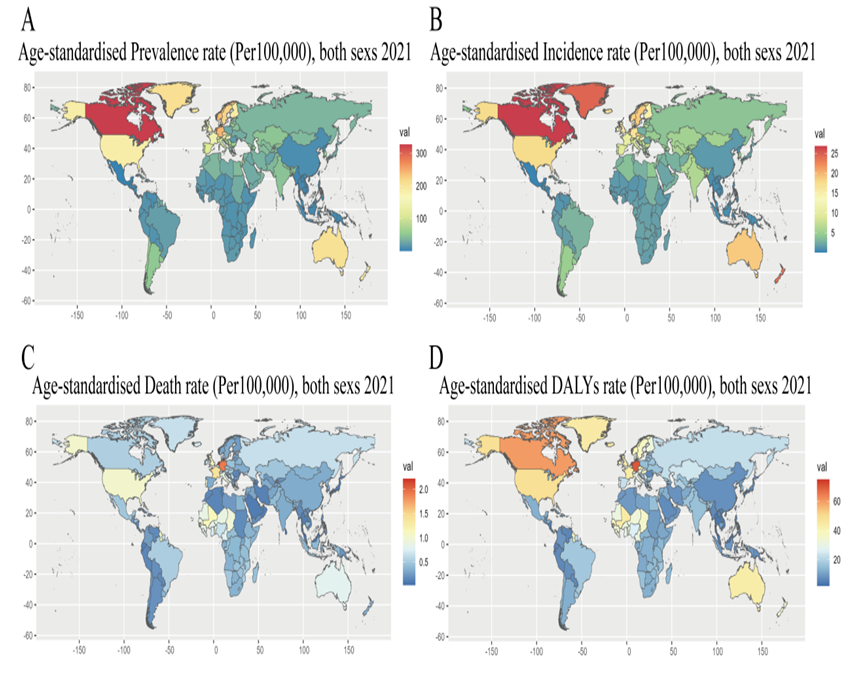
Results:In 2021, the global prevalence of IBD was 3.83 million cases (95% UI: 3.31 to 4.51 million) with an age-standardized prevalence rate (ASPR) of 44.88 per 100,000. The incidence was 375,140 cases (95% UI: 327,686 to 436,925), showing a modest global increase since 1990. The mortality rate decreased to 42,423 deaths in 2021, with an age-standardized mortality rate (ASMR) of 0.52 per 100,000. Significant regional disparities were found, with the highest burden in high-income regions and the lowest in lower SDI regions. Projections suggest a continued decline in incidence and mortality by 2036.
Conclusions:This study provides an important basis for future disease management and public health policies.