
Optimisation and Testing of Structural Parameters of External Tank Wheel Fertiliser Dischargers
##plugins.themes.bootstrap3.article.sidebar##
##plugins.themes.bootstrap3.article.main##
Abstract
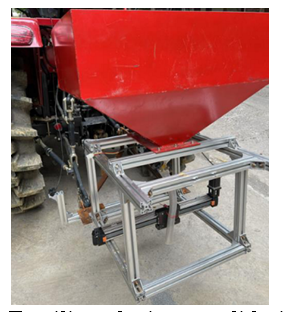
The external trough wheel fertiliser discharger, the most common component of bio-organic fertilizer application systems, the number of grooves, arc-center distance, and effective working length of the groove wheel have a significant impact on its performance. This paper analyzes the effects of these three structural parameters on the uniformity of fertilizer discharge from the external groove wheel, which is the most widely used component in bio-organic fertilizer applicators, using discrete element simulation techniques and orthogonal testing. An simulation orthogonal test was conducted with the coefficient of variation of fertilizer discharge uniformity as the evaluation criterion. The results indicated that the factors influencing fertilizer discharge performance ranked as follows: number of grooves > arc-center distance > effective working length. Among these, the number of grooves had the most significant effect, and the optimal parameter combination derived from the orthogonal test was: 7 grooves, an effective working length of 47.4 mm, and an arc-center distance of 35.7 mm. Under this combination, the coefficient of variation of fertilizer discharge uniformity was 3.53%. To validate the simulation results, a solid prototype was constructed, and the test results showed that the error between the simulation and the actual results was less than 5%, confirming the feasibility of using discrete element simulation technology to study the factors influencing the performance of the external grooved wheel for fertilizer discharge. The findings of this study may offer valuable insights for optimizing the structural parameters of external trough wheel fertilizer discharger.