
Association and Prediction of Five Clinical Indexes in COVID-19 Patients with Different Severities
##plugins.themes.bootstrap3.article.sidebar##
##plugins.themes.bootstrap3.article.main##
Abstract
Background: The new and acute febrile respiratory illness outbreak caused by a coronavirus called ‘COVID-19’ has become a serious global public health, economic, and livelihood concern. Although the diagnosis and treatment of COVID-19 are well established, the altered clinical characteristics of COVID-19 patients have yet to be thoroughly studied.
Materials and methods: We extracted and analyzed some electronic medical records of 178 hospitalized COVID-19 patients with pneumonia, including demographics, clinical manifestations, comorbidities, and laboratory data statistically.
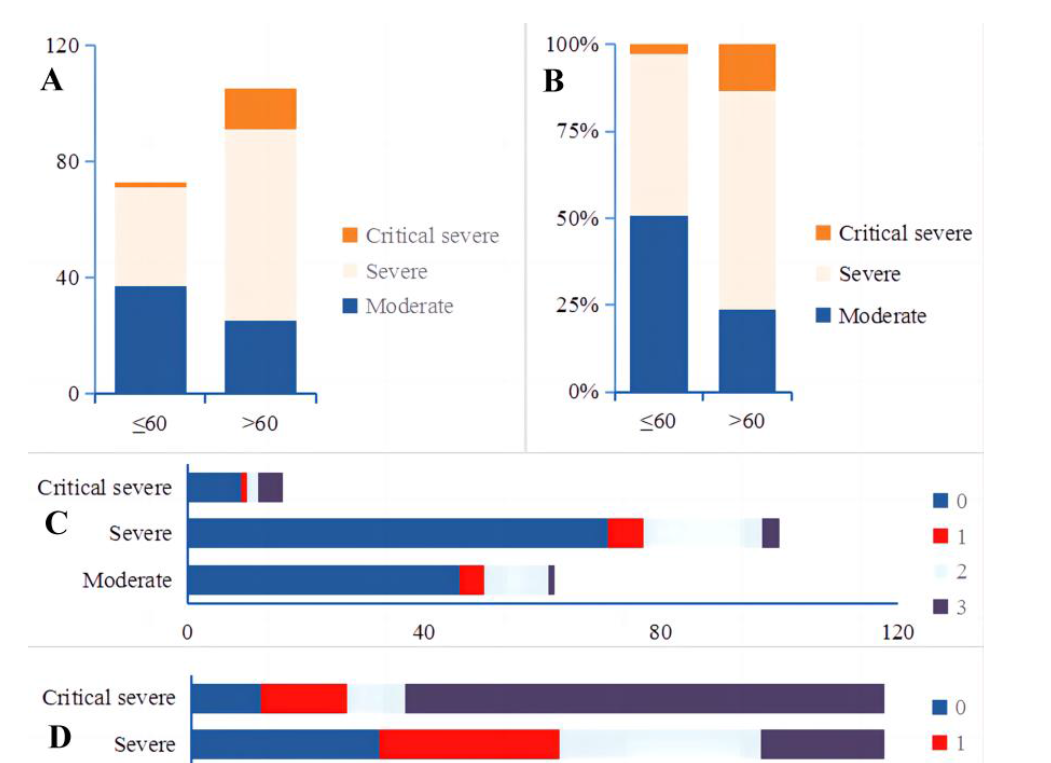
Results: Our study found that the proportion of patients with moderate, severe, and critical severe groups in the group older than 60 was remarkably higher than that in the group younger than 60. Significant differences in the results regarding clinical blood routines among moderate, severe, and critical severe groups. The lymphocyte of critical severe patients was significantly lower than that of moderate patients. However, granulocytes in the critical severe group were considerably higher than those in the moderate and severe groups. We used ROC curve plotting to obtain the best decisive threshold by combined five clinical indexes [lymphocyte, granulocyte, Mean platelet volume (MPV), albumin, and alkaline phosphatase (ALP), AUC= 0.780, 95%CI= 0.69-0.85, P< 0.0001]. The expression levels of ACE2, TMPRSS2, DPP4, ANPEP, NRP1, FUNRIN on lung were assessed by single cell sequence analysis.
Conclusion: We found diagnostic power of disease severity improved on a combined panel. Many clinical indexes showed significant differences among the moderate, severe, and critical severe groups.