
Bibliometric Analysis of Immunotherapy Interventions in Alzheimer's Disease: Insights and Trends
##plugins.themes.bootstrap3.article.sidebar##
##plugins.themes.bootstrap3.article.main##
Abstract
The brain has traditionally been deemed to possess an 'immune privilege' on account of the presence of the blood-brain barrier. The understanding of the interaction between the brain and the immune system has, however, undergone a fundamental change with the discovery of the brain lymphatic network. Alzheimer's disease (AD) is a neurodegenerative disorder whose pathogenesis and pathogenic mechanisms are yet to be fully unraveled. Emerging research indicates that the immune system potentially plays a crucial role in the development and progression of Alzheimer's disease, influencing diverse aspects, for instance, cytokines, inflammatory reactions, and immune cells. The present study, therefore, aims to investigate the relationship linking Alzheimer's disease and the immune system and further scrutinizes the contributions made by various countries, institutions, journals, and authors in this domain, delving further into the research hotspots and trends.
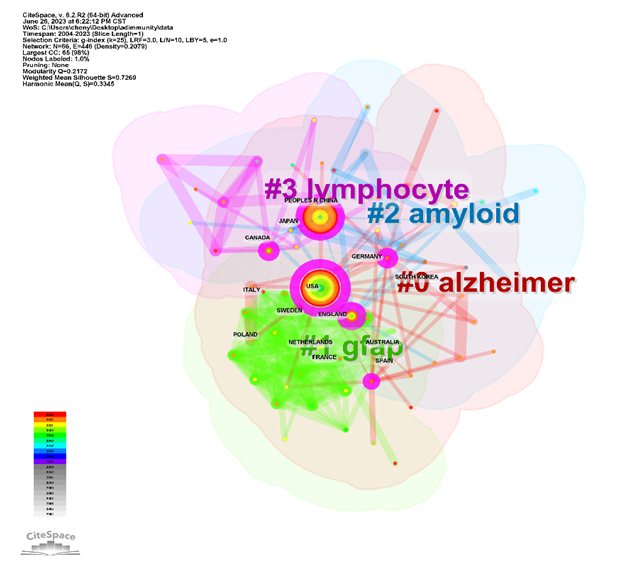
We analyzed 1152 articles from the Web of Science database, revealing a slow growth trend in annual publications. The United States leads in publication volume and international collaborations, with Harvard University having significant influence. Key keywords include Alzheimer's disease, GFAP, Aβ, and lymphocyte.
Our study underscores the potential importance of immune cells like microglia, astrocytes, and lymphocytes in AD pathology, highlighting them as targets for future research. General practices, immunotherapy, and plant therapies emerge as promising interventions. This bibliometric and visual analysis offers insights into the evolving landscape of AD research and the immune system's role, guiding future investigations and therapeutic strategies.