
Novel Compound Heterozygous EVC1 Mutations Cause Ellis-Van Creveld Syndrome in a Chinese Prenatal Fetus
##plugins.themes.bootstrap3.article.sidebar##
##plugins.themes.bootstrap3.article.main##
Abstract
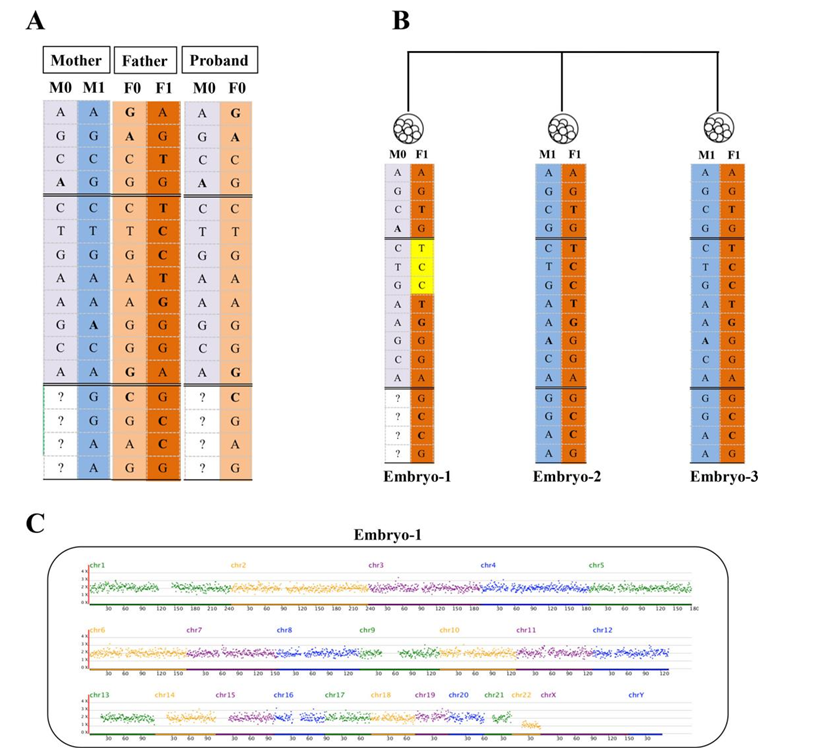
Fetal genetic skeletal disorders are common congenital anomalies with notable genetic and phenotypic heterogeneity. Genetic analysis plays an important role in the definitive diagnosis of these skeletal conditions. In the present study, fetal development was assessed by routine ultrasonography at 16+5 weeks of gestation. Amniocentesis was performed, followed by comprehensive genetic assessment including chromosomal karyotyping, chromosomal microarray analysis (CMA) and whole-exome sequencing (WES). Variants initially identified by WES were subsequently validated using Sanger sequencing or RT-qPCR. In vitro investigations on the newly identified variant were further conducted by RT-qPCR and western blotting (WB) analysis. Preimplantation genetic testing (PGT) for the diagnosed monogenic disease was conducted based on next-generation sequencing (NGS)-based single nucleotide polymorphism haplotype analysis and Sanger sequencing. Meanwhile, PGT for aneuploidy screening was performed by NGS. Prenatal diagnosis was further conducted for validation of the PGT results using a combination of Sanger sequencing, RT-qPCR, CMA and chromosomal karyotyping. Routine second-trimester prenatal ultrasound examination identified shortened limbs (<-2.0 standard deviations) in the fetus. Chromosomal karyotyping and CMA identified no genetic aberrations, whilst WES revealed compound heterozygous variants in EVC1 in the affected fetus. These included a novel frameshift variant (c.130delC, p.Leu44Phefs*72) and a previously reported heterozygous multiexon deletion spanning exons 9-11, both of which were validated by Sanger sequencing and RT-qPCR, respectively. In vitro RT-qPCR demonstrated that the variant c.130delC had no impact on the transcriptional expression of the EVC1 gene, whilst WB demonstrated the accumulation of truncated protein isoforms. Combined genetic and pedigree analysis indicated a diagnosis of Ellis-van Creveld (EvC) syndrome in the fetus. After thorough genetic counseling, the affected pregnancy was terminated. PGT established a subsequent singleton pregnancy not affected by EvC syndrome or chromosomal aneuploidies, which was confirmed by further prenatal diagnosis. The present study identified and characterized a novel mutation in the EVC1 gene, which has broadened the established mutational spectrum of EvC syndrome, and holds notable implications for the clinical management and genetic counseling of families affected by EvC syndrome.