
Distribution and Developmental Characteristics of Sugars and Organic Acids in Fresh Apricots
##plugins.themes.bootstrap3.article.sidebar##
##plugins.themes.bootstrap3.article.main##
Abstract
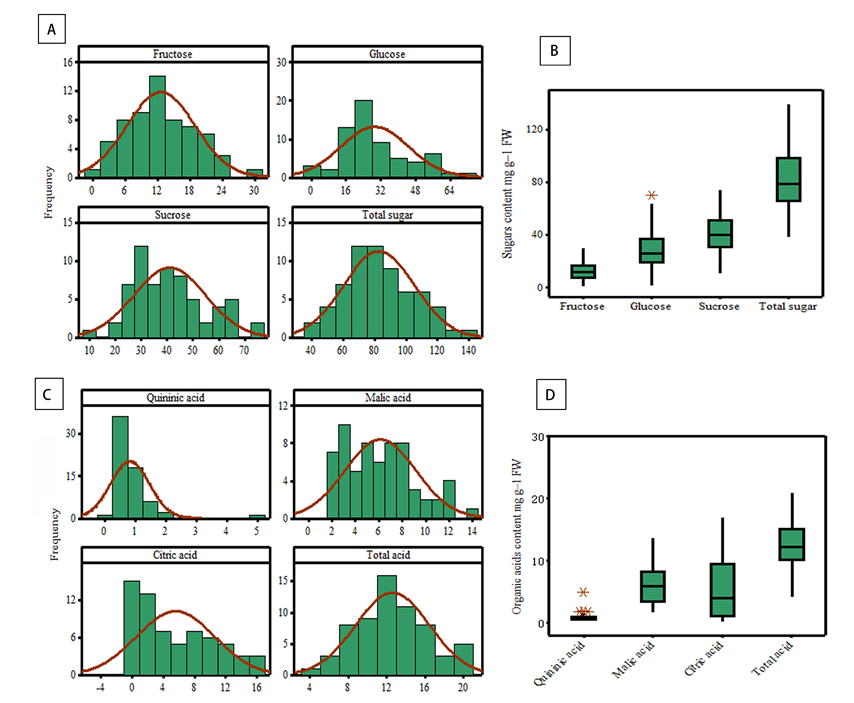
This study systematically analyzed the distribution characteristics and developmental patterns of sugars and organic acids in apricots, aiming to explore the accumulation and metabolism of sugars and organic acids. High-performance liquid chromatography was used to determine the sugar and organic-acid contents and distributions in mature apricot fruits from 64 germplasm resources. The results showed that glucose and sucrose are the main sugars in apricots, and the fruits were classified as sucrose-type, or two-sugar-type based on the calculated value of log2 (glucose/sucrose). Malic and citric acids are the main organic acids in apricots, and the fruits were classified as malic-acid-type, citric-acid-type, or two-acid-type based on the value of log2 (malic acid/citric acid). During fruit development, glucose content remained high, while fructose and sucrose levels were low but increased during ripening, with sucrose showing the most significant accumulation. Malic acid dominated the organic acid profile during development (accounting for over 90% of the total-organic-acids), but its content decreased during maturation, accompanied by a concurrent increase in citric acid, suggesting a potential link between citric acid levels and fruit ripening. These findings provide a valuable foundation for enhancing the flavor quality of apricot fruits.