
英文
##plugins.themes.bootstrap3.article.sidebar##
##plugins.themes.bootstrap3.article.main##
Abstract
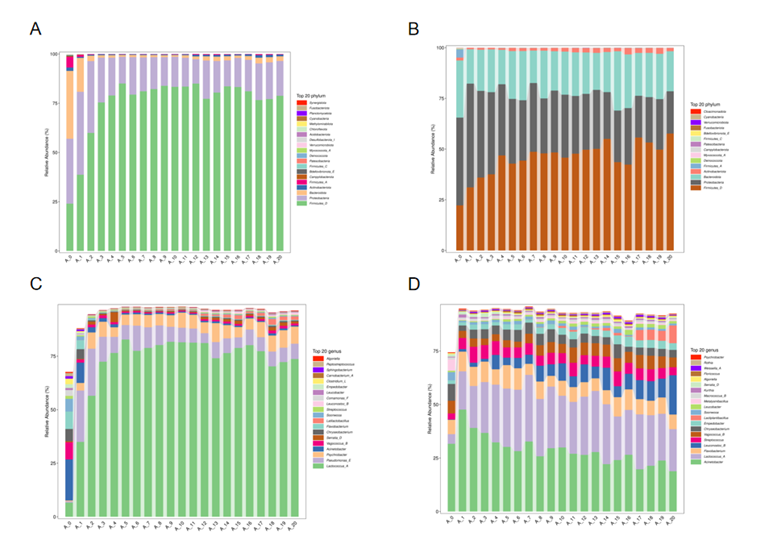
This study investigates spoilage bacterial community changes in Tilapia (Oreochromis) surimi under different low-temperature conditions using 16S rRNA high-throughput sequencing. Samples were preserved at 4℃ and -20℃ for 20 days. Results showed that at 4℃, initial species richness and evenness were high but decreased over time. Dominant genera included Lactococcus_A, Pseudomonas_E, Psychrobacter and Vagococcus_B, which formed a “small group” with synergistic defense and complementary metabolism, but competed with Acinetobacter and Flavobacterium. At -20℃, only a few psychrotolerant genera like Acinetobacter and Lactococcus_A could survive, maintaining stable richness and evenness. Lactococcus_A was dominant under both temperatures, showing tolerance to low and ultra-low temperatures. Alpha and beta diversity analyses revealed that temperature significantly affected microbial composition and function, with more rapid succession at -20℃. This study provides a theoretical basis for optimizing Tilapia (Oreochromis) surimi’s cold chain transportation and extending shelf life.