
AGTRAP: A Novel Prognostic Biomarker of Alternative Splicing Combined with Immune Cell Infiltration in Head and Neck Squamous Cell Carcinoma
##plugins.themes.bootstrap3.article.sidebar##
##plugins.themes.bootstrap3.article.main##
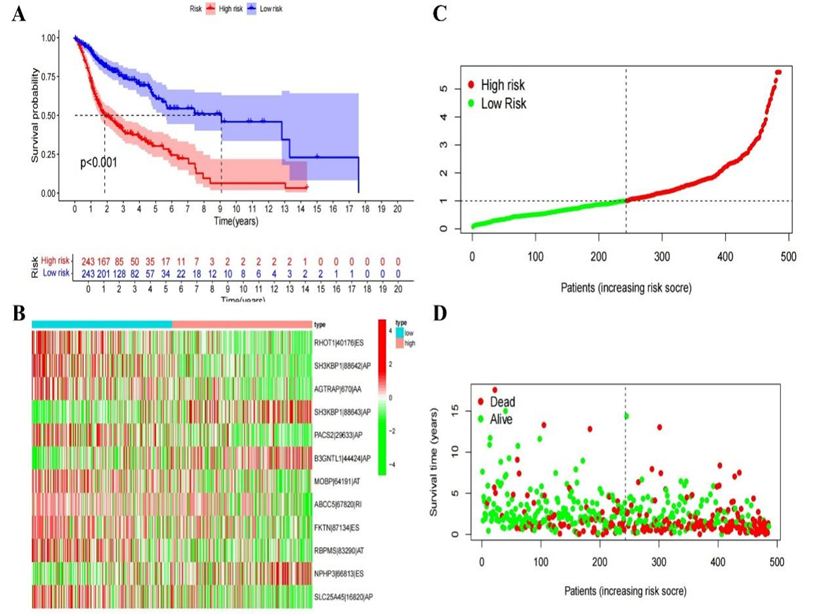
Abstract
Objective: To construct a variable splicing prognostic model and explore the potential of key genes as prognostic biomarkers in head and neck squamous cell carcinoma (HNSC). Methods: Download the RNA-Seq data of the HNSC cohort and the corresponding clinical data from the TCGA database, and download the alternative splicing data of HNSC from the TCGA SpliceSeq database. Identify the alternatively spliced events with differential expression according to the percent spliced in (PSI) values. Analyze the alternative splicing events related to prognosis and establish a prognostic risk model. Analyze the correlation between the model and prognosis and screen out the key genes. Combine with the analysis of immune cell infiltration to explore the prognostic impact of key genes on HNSC. Finally, the expression differences of the target genes in the tissues were verified by reverse transcription quantitative polymerase chain reaction (RT-qPCR). Results: The AGTRAP gene was significantly highly expressed in the HNSC cohort. The occurrence frequency of the 670th alternative receptor site of AGTRAP increased in HNSC, and the overall expression level of the AGTRAP gene could serve as an independent prognostic risk indicator for HNSC. Conclusions: The overall expression level of the AGTRAP gene can serve as a prognostic biomarker associated with alternative splicing combined with immune infiltration in HNSC.