
Circular RNA circASAP1 facilitates gastric cancer progression by sponging miR-874-3p and upregulating CPEB4
##plugins.themes.bootstrap3.article.sidebar##
##plugins.themes.bootstrap3.article.main##
Abstract
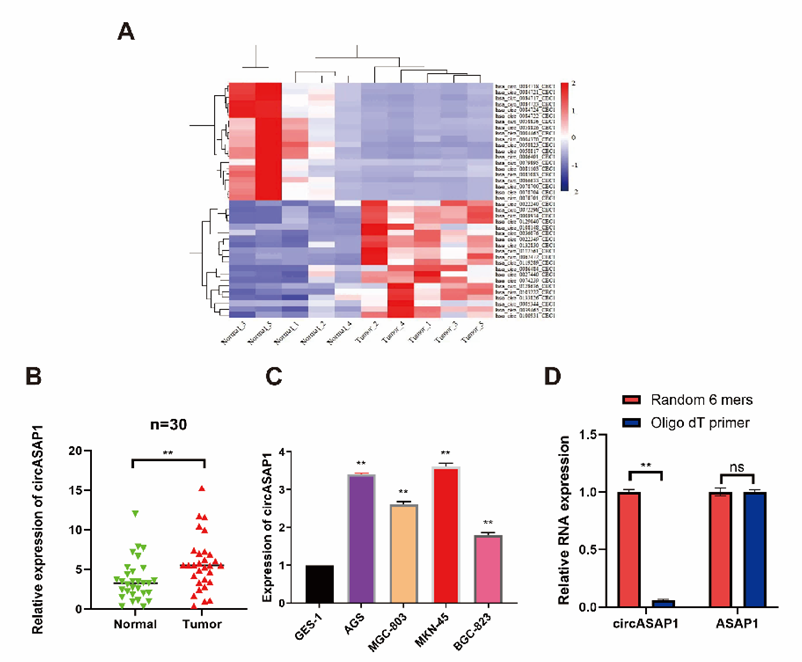
Gastric cancer (GC) ranks as the fifth most prevalent malignancy globally and the fifth leading cause of cancer-related mortality. Although age-standardized incidence rates have declined gradually over recent decades, the absolute case burden continues to rise, driven largely by population aging and demographic growth. The clinical outlook for advanced GC remains poor, creating an urgent need to dissect the underlying molecular mechanisms. Circular RNAs (circRNAs) are established post-transcriptional regulators across multiple cancer types; however, the functional roles of most circRNAs in GC pathogenesis remain poorly characterized. In this study, we identified a significantly upregulated circRNA, hsa_circ_0008934 (designated circASAP1), in GC tissues and cell lines through microarray profiling and qRT-PCR validation. Functional assays demonstrated that circASAP1 knockdown markedly suppressed, while its overexpression promoted, GC cell proliferation, colony formation, DNA synthesis, migration, and invasion in vitro. Mechanistically, circASAP1 acts as a competitive endogenous RNA (ceRNA) by directly sponging miR-874-3p, thereby derepressing the oncogenic target CPEB4. Luciferase reporter and RNA fluorescence in situ hybridization (FISH) assays confirmed the direct interactions among circASAP1, miR-874-3p, and the CPEB4 3′ untranslated region. Rescue experiments validated that the pro-tumorigenic effects of circASAP1 are mediated, at least in part, through the miR-874-3p/CPEB4 axis. These findings establish the circASAP1/miR-874-3p/CPEB4 regulatory cascade as a driver of GC progression and identify circASAP1 as a candidate prognostic biomarker and therapeutic target.