
Utilization of Silkworm Pupae-Derived Biochar for Cr(VI) Removal
##plugins.themes.bootstrap3.article.sidebar##
##plugins.themes.bootstrap3.article.main##
Abstract
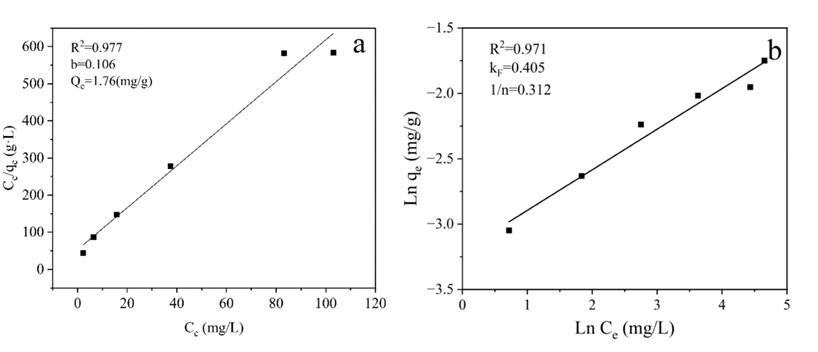
Silkworm pupae, a prevalent agricultural residue in China, are rich in proteins and polysaccharides, offering significant potential for resourceful utilization. This study investigates the application of silkworm pupa-derived biochar for the removal of hexavalent chromium [Cr(VI)] from water. Biochar was produced through pyrolysis at 300 °C, 400 °C, and 500 °C at varying retention times. The silkworm pupa biochar produced at 300 °C exhibited effective Cr(VI) removal under acidic conditions (pH < 3), at a relatively low temperature of 15 °C, and with an adsorbent dosage below 5 g/L, reaching a maximum adsorption capacity of 1.476 mg/g. The adsorption process was consistent with the pseudo-second-order kinetic equation and the Freundlich isotherm adsorption model, which indicate that the adsorption of Cr(VI) by the biochar proceeded simultaneously with membrane diffusion and intraparticle diffusion. Some oxygen-containing functional groups and C=C groups were involved in the adsorption process. The study highlights the feasibility of using silkworm pupa biochar as a sustainable and economically viable adsorbent for wastewater remediation. These findings provide a potential approach for utilizing agricultural waste in environmental management, contributing to both waste treatment and pollution control.