
Investigate Placental Vascular Impedance Is Associated with Maternal Cardiac Performance and Remodeling in Pregnancy Placental Impedance and Maternal Cardiovascular Adaptation
##plugins.themes.bootstrap3.article.sidebar##
##plugins.themes.bootstrap3.article.main##
Abstract
Abstract
Objectives: This study aimed to evaluate the relationship between the placental pulsatility index (PPI) and maternal cardiovascular adaptation, specifically assessing cardiac geometry, diastolic/systolic function, and global hemodynamics.
Methods: In this cross-sectional study of 389 singleton pregnancies (May 2024–April 2025), concurrent Doppler-derived PPI and comprehensive transthoracic echocardiography were performed. Pearson correlations were used to analyze the link between PPI and cardiac indices.
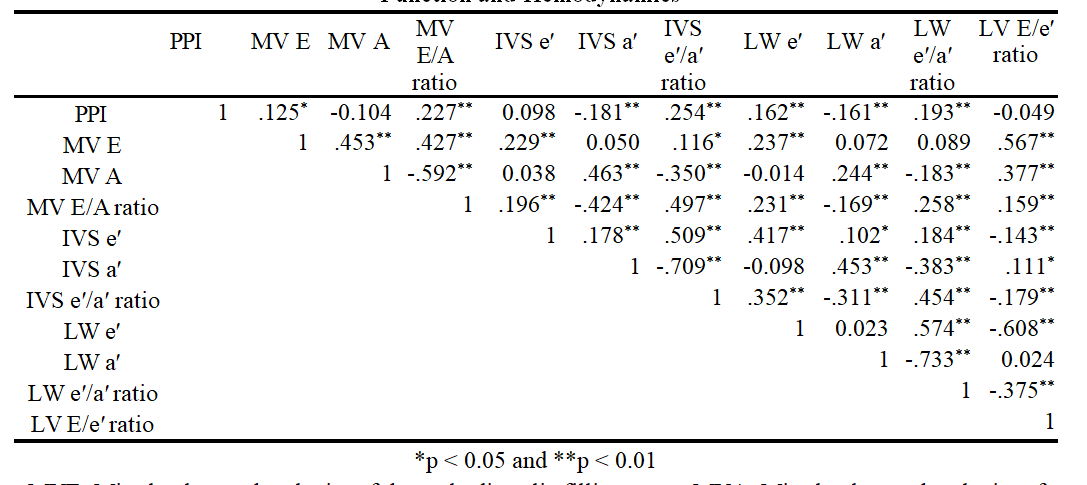
Results: Elevated PPI was significantly associated with attenuated physiological eccentric remodeling, evidenced by inverse correlations with LV end-diastolic volume (r = -0.125, p = 0.024) and interventricular septal thickness (r = -0.139, p = 0.012). PPI showed robust positive correlations with diastolic parameters, such as the mitral E/A ratio (r = 0.227, p < 0.001) and septal e'/a' ratio (r = 0.254, p < 0.001). Furthermore, higher PPI correlated with decreased cardiac output (r = -0.237, p < 0.001), while conventional systolic indices remained largely stable.
Conclusions: Increased placental vascular resistance is linked to detectable alterations in maternal diastolic function and ventricular geometry. Diastolic parameters appear more sensitive to placental impedance, suggesting their potential value in antenatal cardiovascular surveillance.