
Anti-Inflammatory and Antioxidant Effects of Ganoderma Lucidum in Preventing a Mouse Model of High-Altitude Pulmonary Edema
##plugins.themes.bootstrap3.article.sidebar##
##plugins.themes.bootstrap3.article.main##
Abstract
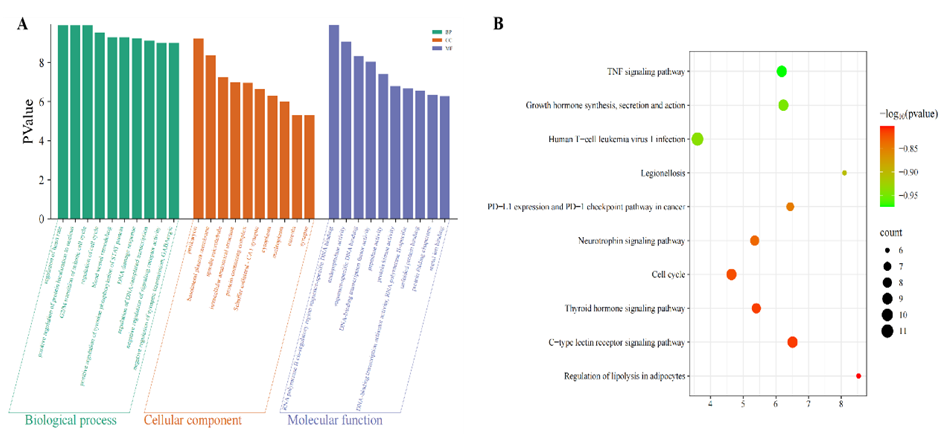
High-altitude pulmonary edema (HAPE) is a life-threatening high-altitude illness triggered by acute exposure to hypobaric hypoxic environments. Ganoderma lucidum, with prominent anti-inflammatory and antioxidant effects, serves as a potentially valuable therapeutic agent for such conditions. This study aimed to explore the key biological pathways and specific mechanisms of Ganoderma lucidum’ s protective effect against HAPE in mice, using an integrated approach of bioinformatics analysis and experimental verification. Ganoderma lucidum was first administered to HAPE mice as an intervention. Subsequently, histopathological changes in mouse lung tissues were assessed via hematoxylin-eosin (HE) and Masson staining; inflammation-related factor levels were detected by ELISA; key target genes and main biological pathways of Ganoderma lucidum in regulating HAPE were predicted through bioinformatics methods; and finally, Western blot (WB) analysis was used to measure the expression of these predicted key target genes. Bioinformatics analysis revealed a strong functional correlation between Ganoderma lucidum and HAPE pathological regulation. Histopathological observations showed that compared with the HAPE model group, the Ganoderma lucidum group had alleviated lung tissue damage, characterized by reduced alveolar septal edema, inflammatory cell infiltration, and collagen deposition. ELISA results confirmed Ganoderma lucidum downregulated pro-inflammatory protein levels, while WB experiments demonstrated it significantly decreased the protein expression of key HAPE pathogenesis-related targets (Adora2b, Ccr2, Ttk, Ace, Cma1, Hspa1a) compared with the model group. This study suggests Ganoderma lucidum may be involved in HAPE-related pathways and effectively inhibit HAPE progression via significant anti-inflammatory and antioxidant effects.