
Comprehensive Assessment of Phenotypic Diversity Analysis and Selenium Enrichment Capacity in 62 Wild Cardamine enshiensis germplasm resources from Enshi, Hubei Province
##plugins.themes.bootstrap3.article.sidebar##
##plugins.themes.bootstrap3.article.main##
Abstract
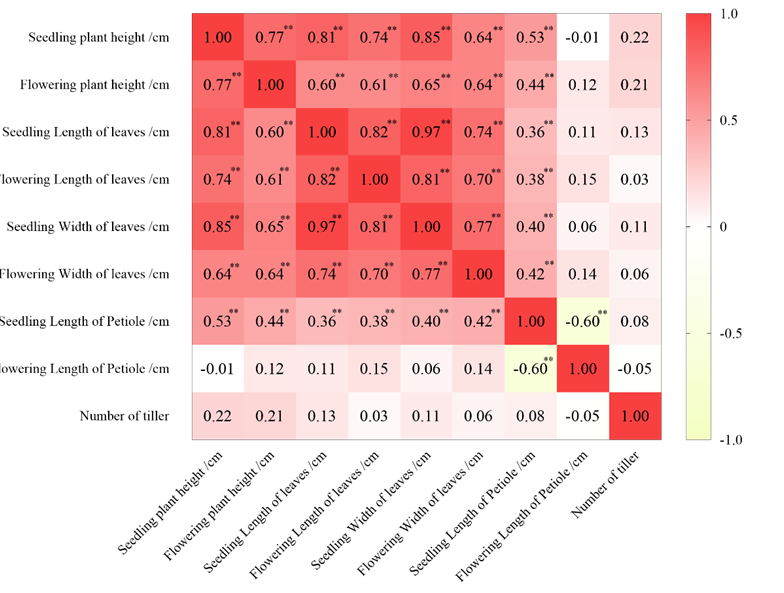
The study systematically analyzed the diversity, correlation, and comprehensive performance of phenotypic traits at both seedling and flowering stages using 62 wild Cardamine enshiensis germplasm resources. The results showed that: the phenotypic traits exhibited substantial variation, with coefficients variation (CV) ranging from 10.61% to 30.88%, while seedling-stage traits generally displayed greater variability than flowering-stage traits; plant height, leaf length, and leaf width at the seedling stage were significantly positively correlated with those at the flowering stage (r = 0.77-0.82), indicating that early growth can predict later performance; the selenium content results showed that the leaves of Cardamine enshiensis contained selenium levels as high as 3,695.71 μg/kg; cluster analysis grouped the resources into three distinct types, the third group exhibiting exceptionally high biomass potential; principal component analysis (PCA) extracted three principal components, cumulatively explaining 79.12% of the total variation. Based on comprehensive evaluation scores, 10 elite resources with robust growth, high tillering ability, and strong selenium accumulation were identified. This study provides the theoretical foundation and material basis for breeding high-yield, selenium-enrich C. enshiensis varieties.