
Upregulation of PLOD2 is Associated with Tumor Progression and Immune Infiltration in Clear Cell Renal Cell Carcinoma PLOD2 in renal cell carcinoma
##plugins.themes.bootstrap3.article.sidebar##
##plugins.themes.bootstrap3.article.main##
Abstract
Objective: Renal cell carcinoma (RCC) is the most common malignant renal tumors in adults. PLOD2 is overexpressed in different human cancers and closely related to a poor prognosis. Here, we aimed to explore the expression of PLOD2 in ccRCC and its roles in tumor progression and immune infiltration based on various database.
Methods: PLOD2 expression levels in different human cancers and its correlation with immune infiltration in ccRCC were determined by using TIMER 2.0 database. GEPIA database was used to evaluate PLOD2 expression and its prognostic significance in ccRCC. The UALCAN database was used to evaluate the association between PLOD2 expression and clinicopathologic features in ccRCC patients. The correlation between PLOD2 expression and immunomodulators in cancers was determined by using the TISIDB database. The differential expressed genes (DEGs) in PLOD2 high expressed group and PLOD2 low expressed group were explored from TARGET database.
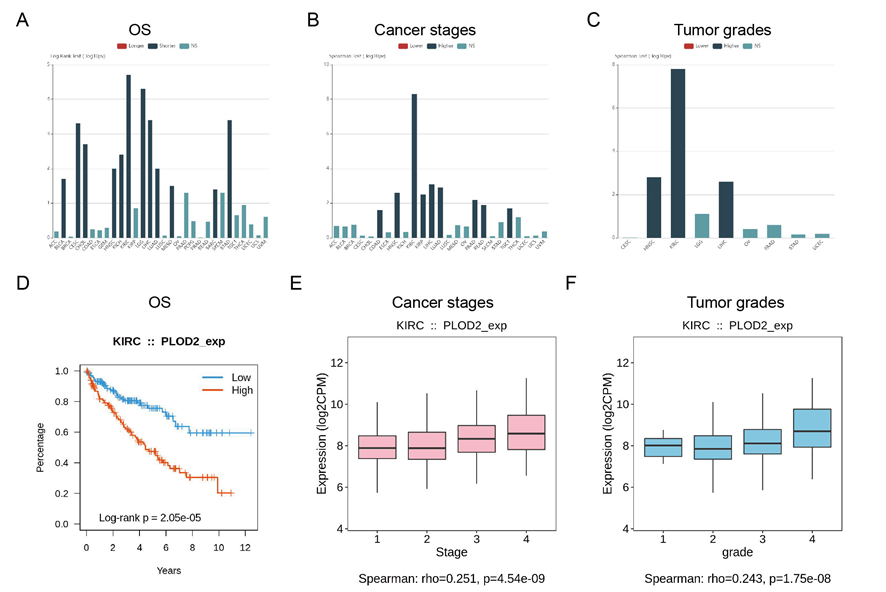
Results: PLOD2 is upregulated in multiple human cancers including ccRCC. PLOD2 upregulation is associated with advanced clinical characteristics and poor prognosis in ccRCC. Moreover, overexpression of PLOD2 is correlated with several chemokine expression and immune cells infiltration in ccRCC.
Conclusions: Upregulation of PLOD2 is associated with tumor progression and immune infiltration in ccRCC. PLOD2 may may serve as a novel therapeutic target in the treatment of ccRCC.