
Comparative Evaluation of Modern Medical Ultrasound Gels in the Sonographic Detection of Breast Microcalcifications: A Clinical Validation Study
##plugins.themes.bootstrap3.article.sidebar##
##plugins.themes.bootstrap3.article.main##
Abstract
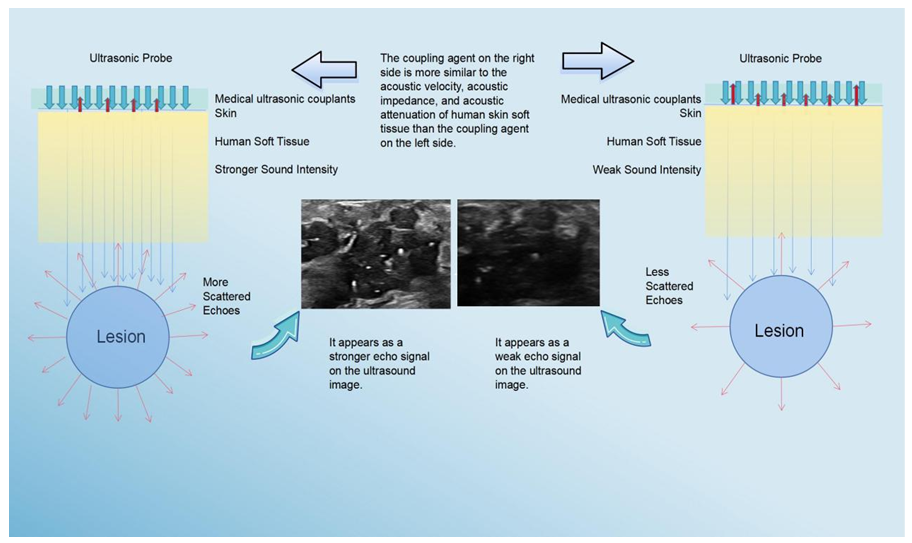
Background: The detection of breast microcalcifications (MCs) by ultrasound is challenging due to their size being near the resolution limit. While ultrasound gel is essential for acoustic coupling, whether advancements in gel technology translate to improved MC detection remains unclear.
Objective: To clinically evaluate whether three commercially available ultrasound gels, compliant with the current Chinese national standard YY0299-2016, yield differences in the detection and characterization of MCs in breast carcinoma.
Methods: In this retrospective self-controlled study, 165 patients with pathologically proven breast carcinoma and mammographically identified MCs were included. Each patient underwent preoperative breast ultrasonography using the same scanner and settings. Three different gels were applied sequentially to the same lesion. The visibility, number, and echo intensity of scattered, clustered, and isolated MCs (≤1 mm) were assessed by two blinded radiologists.
Results: No statistically significant differences were found among the three gels in the detection rates of patients with MCs, clustered MCs, or isolated MCs (Cochran's Q test, P > 0.05). The inter-observer agreement was excellent (kappa > 0.85). Minor variations in the subjective echo intensity of a few isolated MCs were not statistically significant.
Conclusion: Under the stringent requirements of the YY0299-2016 standard, modern ultrasound gels exhibit highly comparable acoustic performance. Their differences do not translate to clinically significant improvements in the sonographic detection of microcalcifications, suggesting a performance plateau has been reached for this specific diagnostic task.