
Growth Physiology and Transcriptome Analysis of Alpine Wet Plants in Response to Flooding Stress
##plugins.themes.bootstrap3.article.sidebar##
##plugins.themes.bootstrap3.article.main##
Abstract
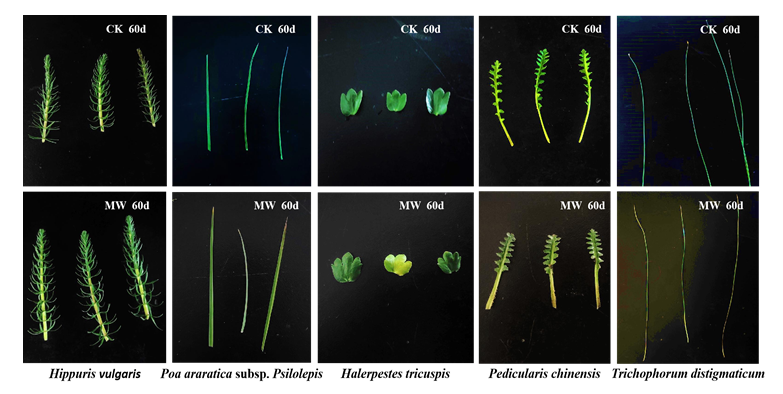
This study focuses on five dominant alpine plants, namely Halerpestes tricuspis, Hippuris vulgaris L, Trichophorum distigmaticum, and Poa psiolepis, to explore the adaptive mechanisms of alpine hygrophytes to waterlogging stress. These plants were selected as the research subjects. After 60 days of waterlogging stress treatment, their adaptability was evaluated through morphological observation, determination of physiological and biochemical indicators, and transcriptome sequencing analysis. The results showed that: (1) Waterlogging stress caused significant leaf yellowing in all species except Sarcosum (note: this species was not mentioned in the earlier list and needs clarification), and the root-crown ratio of Pedicularis chinensis (note: this species was not mentioned in the earlier list and needs clarification) increased significantly (P<0.05); (2) The chlorophyll a/b content decreased significantly, while the carotenoid content increased; the MDA content increased by 1–3 folds; the activities of SOD and POD increased, but the activity of CAT decreased; (3) Interspecific differences were observed in osmotic regulatory substances while increasing in Ranunculus triphyllus (note: this species was not mentioned in the earlier list and needs clarification)); (4) Transcriptome analysis revealed significant enrichment of the glycolysis, glutathione metabolism, and ethylene signalling pathways (with key genes such as ADH, GST, and ERF1). These results indicate that alpine wetland plants exhibit strong adaptability to waterlogging stress by coordinately regulating the stability of photosynthetic structures , antioxidant systems, and osmotic balance. This study provides a basis for species screening in the restoration of alpine wetland vegetation.