
IGFBP3 as a Potential Biomarker and Therapeutic Target in Hepatocellular Carcinoma: A Multi-Cohort Analysis
##plugins.themes.bootstrap3.article.sidebar##
##plugins.themes.bootstrap3.article.main##
Abstract
Objective: This study aimed to investigate the expression patterns and prognostic significance of insulin-like growth factor-binding protein 3 (IGFBP3) in hepatocellular carcinoma (HCC) and other cancer types.
Methods: IGFBP3 expression profiles and clinical data from The Cancer Genome Atlas (TCGA)-LIHC, International Cancer Genome Consortium (ICGC-LIRI-JP), Gene Expression Omnibus (GEO; GSE102079/GSE112790), and Genotype-Tissue Expression (GTEx) databases were integrated. Experimental validation was performed using immunohistochemistry (IHC) and qRT-PCR to compare IGFBP3 expression between HCC and adjacent non-tumor tissues. Survival analysis was conducted using Kaplan-Meier curves for both TCGA and ICGC cohorts. Immune infiltration correlations were assessed using ESTIMATE and TIMER algorithms. Pan-cancer analysis was conducted using TCGA data.
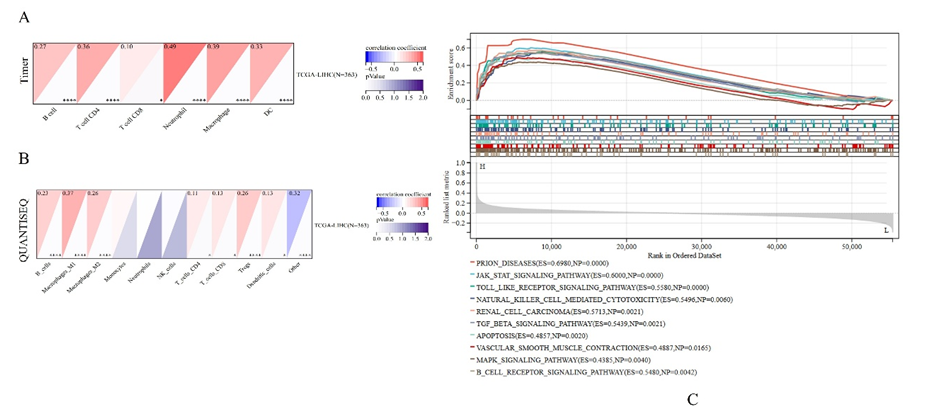
Results: IGFBP3 expression was significantly downregulated in HCC across multiple cohorts (TCGA, ICGC, and GEO) and experimental validation (IHC and qRT-PCR) (p<0.01). Its expression positively correlated with advanced clinical stage: elevated IGFBP3 levels were observed in late-stage (III–IV) and higher T-stage tumors (TCGA-LIHC, p < 0.01), and high expression was more frequent in poorly differentiated (G3–G4) tumors. Importantly, overexpression of IGFBP3 correlated significantly with poorer overall survival (TCGA: p=0.004, HR=1.666 [95% CI 1.176–2.360]; ICGC: p=0.0009, HR=4.631 [95% CI 1.688–12.71]) and progression-free survival (TCGA: p=0.014, HR=1.734 [95% CI 1.118–2.688]). Mechanistically, IGFBP3 expression was positively correlated with B cell and macrophage infiltration (r=0.39, p<0.0001). Pan-cancer analysis revealed tissue-specific dysregulation of IGFBP3 with varying expression levels and prognostic implications for different tumor types.
Conclusion: IGFBP3 was low expression in HCC. However, elevated IGFBP3 correlates with advanced disease, specific subgroups (female, age<40), and serves as a robust independent predictor of poor prognosis. IGFBP3 also associates with immune infiltration (B cells, macrophages) and exhibits tissue-specific dysregulation across cancers, establishing it as a valuable prognostic biomarker and potential therapeutic target in HCC.